Luca


L.U.C.A. is both my name and the acronym for Last Universal Common Ancestor. It is something I discovered only recently thanks to the Netflix series "Life on Our Planet" . It refers to the first cell that formed 4 billion years ago, from which all living beings descend.
The three laws of existence, as depicted in the documentary, are fascinating. I think they are worth deepening because we can link them to our daily lives:
- Only the beings that adapt best to the environment survive. As simple as that: survival is the only imperative.
- Competition drives adaptation. The most acute competition comes from one's own kind.
- Earth never remains stable for long. At four different times more than three-quarters of all species were lost in mass extinction. The ones alive today make up roughly 1% of the species that ever lived.
The documentary shows how life simply exists, and the efforts of all living beings are aimed at its continuation. The evolution that led to us, and to all other diverse species, was driven merely by random mutations in the DNA from that first L.U.C.A. cell. Only a small fraction actually work, but they make all the difference. Failure is the norm, and something useful comes only with big numbers.
The first humans appeared 200,000 years ago. For 188,000 of those years, humans were just hunter-gatherers; the history of civilization’s progress began only 12,000 years ago . The dinosaurs existed for 160 million years. If human progress continues at this exponential rate, imagine where we'll be in 159 million years.
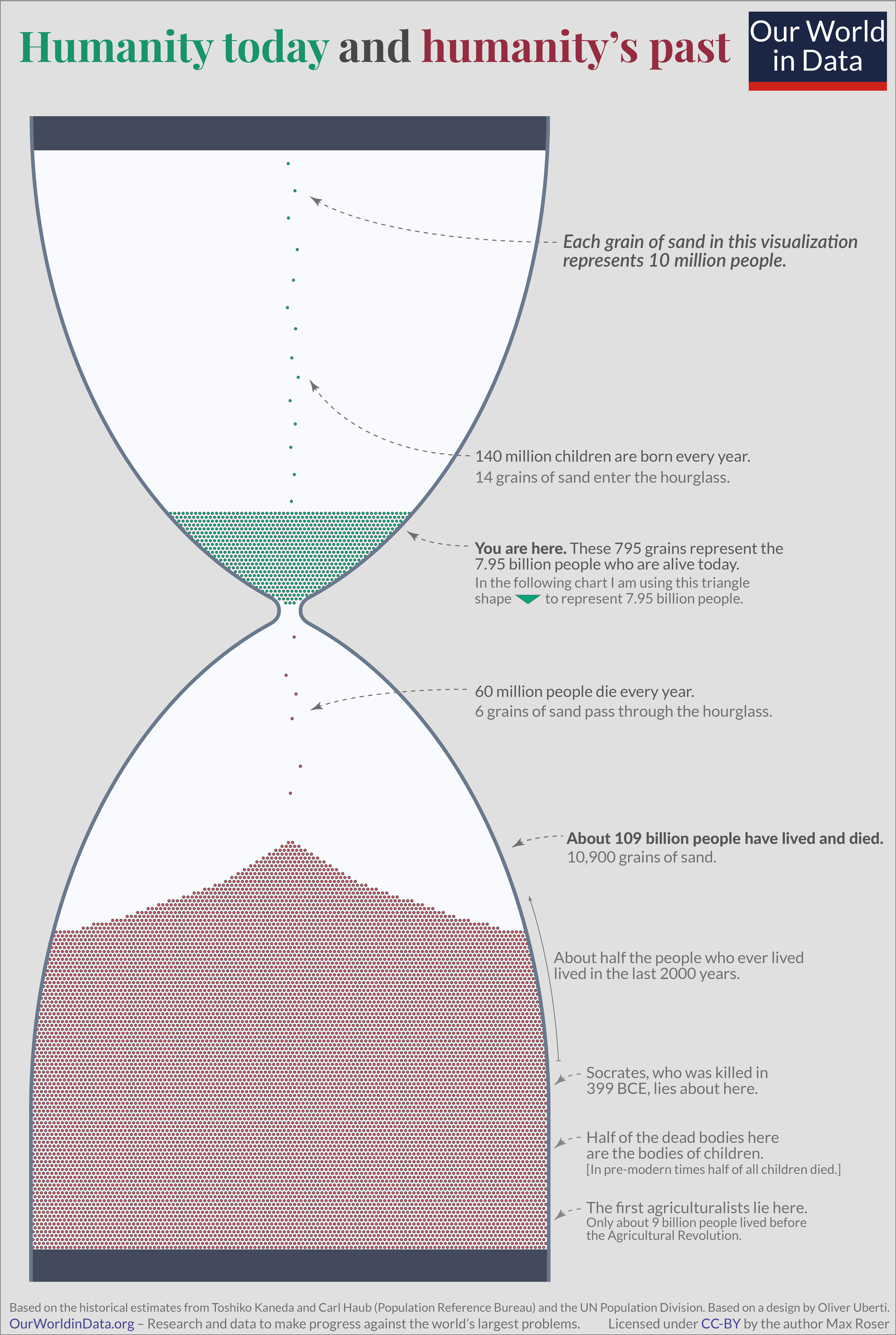
However, the flip side of this reasoning is that intelligent species may end up destroying themselves once a certain level of technology is reached. That might be the reason behind Fermi's Paradox: the fact that there is no evidence of advanced extraterrestrial life despite it being statistically very probable.
Perhaps our final test of adaptation, the first law, is learning how to survive our own progress without triggering our own extinction.